


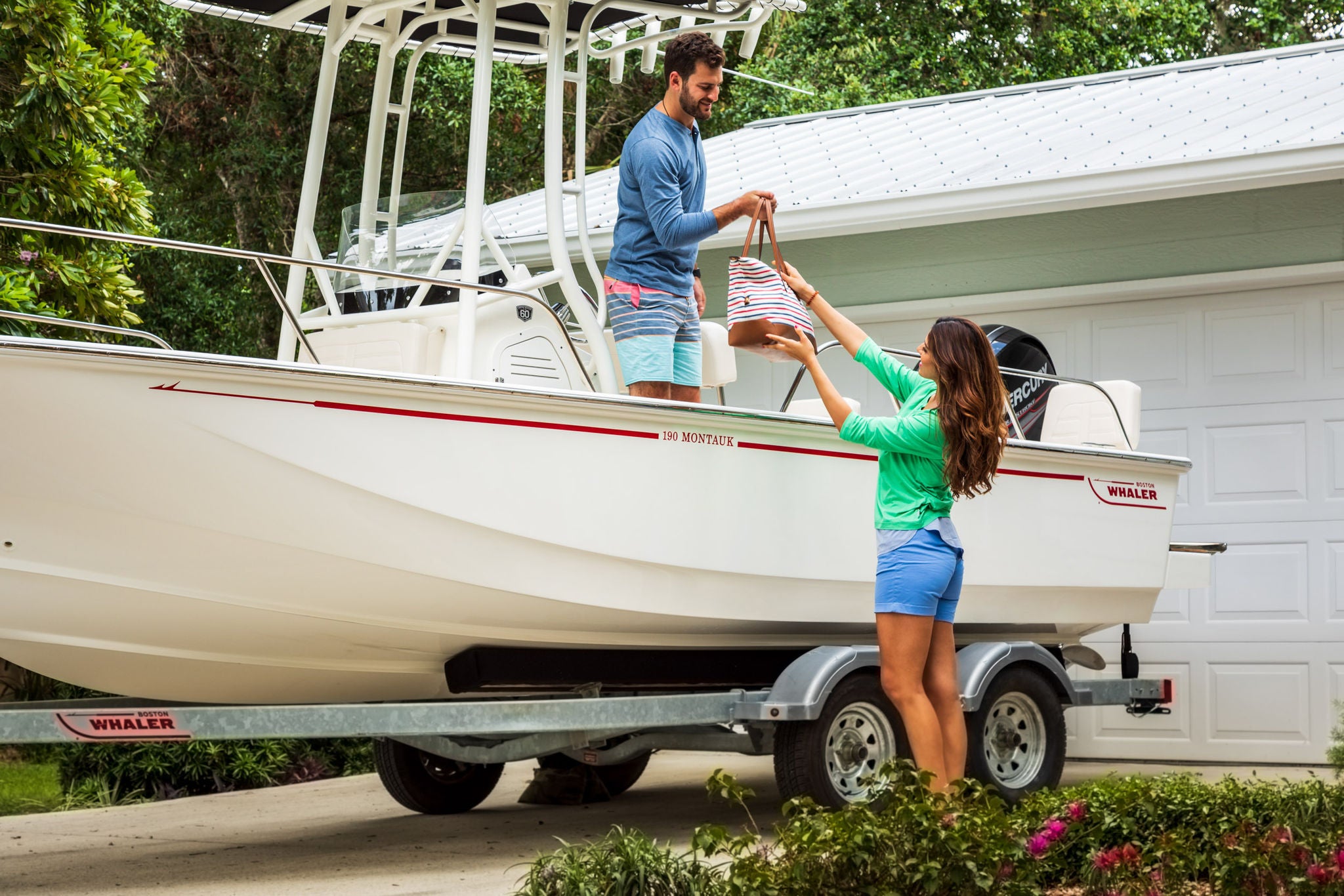
Ultimate Pre-launch Boating Checklist
The information provided is for general informational purposes only. This information is based on the author’s personal experience and does not constitute financial or legal advice. You should consult with a professional and/or conduct your own independent research to verify any information in this post prior to making a financial decision or otherwise.
Ultimate Pre-Launch Boating Checklist
How to make your Boston Whaler and yourself ready for this year’s boating season
Before you cast off and chase the horizon, take the necessary time to ensure your boat is shipshape and your crew is prepared. See how having a pre-departure checklist for your vessel can help ensure your boat is adventure-ready and compliant with safety regulations.
Know Your Vessel: The Must-Haves for Every Boater
Before you power up and push off, make sure it’s equipped with the federally mandated essentials.
- Minimum Required Equipment Registration & Documentation: Your state registration, official numbering, and any required certificates should be onboard and up to date.
- Personal Flotation Devices (PFDs): One lifejacket per person—no exceptions! Plus, a throwable flotation device.
- Visual Distress Signals: Flares, flags, or an emergency beacon—be seen when it matters most.
- Fire Extinguishers: Fully charged and within reach.
- Ventilation & Backfire Flame Arrestor: Keeps fuel fumes in check and your engine running safely.
- Sound-Producing Device(s): A horn, whistle, or bell—because sometimes you need to be heard before you’re seen.
- Navigation Lights: Essential for night voyages and low-visibility conditions.
- Pollution & Waste Compliance: Oil and garbage placards, plus a marine sanitation device to keep the waterways pristine.
- Navigation Rules: Know the "rules of the road" for open water.
- State-Specific Requirements: Check your local regulations for any extras needed.
Beyond the Basics: Extra Gear for a Worry-Free Voyage
While the federal checklist keeps you legal, a few extra precautions can make all the difference. Consider these additional tools for safety, navigation, and peace of mind.
Essential Safety & Navigation Gear
- VHF Marine Radio – Your lifeline to emergency services and fellow boaters.
- Anchor & Tackle – For when you want to stay put (or need to).
- Charts & Navigation Tools – Especially helpful if you're in unfamiliar waters.
- Magnetic Compass – Because GPS isn’t foolproof.
- Mooring Lines, Boat Hook & Fenders – Docking doesn’t have to be a disaster.
- Bilge Pump or Bailing Device – Water belongs outside the boat, not inside it.
- Tool Kit & Spare Parts – Fuses, spark plugs, belts… a little preparation goes a long way.
- Spare Battery & Propeller – Because breakdowns don’t happen on schedule.
- Extra Fuel & Oil – Running on empty is not an option.
- Alternate Propulsion (Paddles/Oar) – When all else fails, go old-school.
- Flashlight & Batteries – Essential for night navigation and unexpected power failures.
- Searchlight – Because finding things in the dark isn’t fun.
- First Aid Kit – Accidents happen. Be ready.
Personal Safety & Emergency Supplies
- Sunscreen – The sun feels great but protect your skin.
- Signal Mirror – A simple, effective way to call for help.
- Food & Water – Because nobody enjoys boating on an empty stomach.
- Extra Clothing – Weather changes fast. Stay warm and dry.
- AM/FM Radio & Mobile Phone – Stay informed, stay connected.
- Binoculars – Spot obstacles, other boats, or just enjoy the view.
Pre-Departure Final Once-Over
- Communication Check – Test your marine radio with a voice call.
- Lighting Check – Navigation and anchor lights should be fully operational.
- Steering & Controls – Ensure smooth movement and proper tilt/trim function.
- Bilge Pump & Water Levels – No excess water should be lurking in the bilge.
- Fuel System & Engine Fluids – No leaks, no low levels, no surprises.
- Boat Plug – Installed and secure (because forgetting this is a classic rookie mistake).
- Electrical & Heating Systems – No loose wires, strange smells, or warning lights.
- Gauges & Battery – Ensure all readings are normal and your battery is charged.
- Anchor Readiness – You never know when you’ll need to drop anchor quickly.
- Weight & Gear Balance – Secure loose items and distribute weight properly.
- Emergency Plan Review – Everyone onboard should know where to find safety gear and how to use it.
- Lifejacket Fit Check – A snug lifejacket is a safe lifejacket. Have everyone try theirs on.
- Weather Forecast Check – Mother Nature is unpredictable—always check before you go.
A final bit of advice—respect the water and enjoy every moment!
For more info, see our printable checklist for boating safety gear.
This website does not provide financial or legal advice. The information available on this website is provided for general informational and educational purposes only and is not a substitute for professional advice. You should consult with the appropriate professionals prior to making any financial decisions. YOUR USE OR RELIANCE ON ANY OF THE INFORMATION PROVIDED HEREIN IS SOLELY AT YOUR OWN RISK. UNDER NO CIRCUMSTANCE SHALL WE HAVE ANY LIABILITY TO YOU FOR ANY LOSS OR DAMAGE OF ANY KIND INCURRED AS A RESULT OF THE USE OR RELIANCE ON ANY INFORMATION PROVIDED.
Options and features mentioned subject to change. Please confirm availability of all accessories and equipment with an authorized Boston Whaler Dealer.